
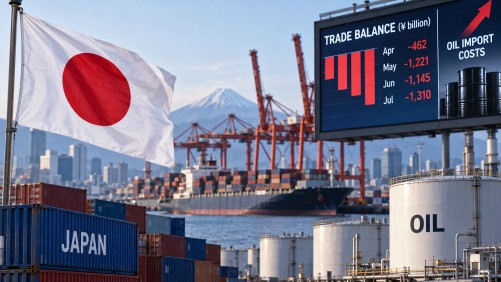
Japan’s economy continues to grapple with the consequences of rising oil prices, as the country recorded a trade deficit of approximately 1.1 trillion yen ($7 billion) in August. This marks the fourth straight month of trade shortfalls for Japan, primarily driven by the surge in energy import costs. The ongoing instability in the Middle East has exacerbated the situation, affecting oil supplies and increasing shipping costs, which hit Japan particularly hard due to its heavy reliance on imported energy.
According to preliminary data released by Japan’s Finance Ministry, imports in August soared by 28% compared to the same month last year, reaching 11.15 trillion yen ($71.9 billion). This sharp rise in import costs underscores the impact of geopolitical tensions around the Strait of Hormuz, a critical channel for global oil shipments, which has seen disruptions that directly affect Japan’s economy.
On the export front, Japan witnessed a 19.3% increase year-on-year, totaling 10 trillion yen ($64.5 billion). The growth in exports was bolstered by strong demand for automobiles and computer chips, with significant contributions from trade partners like the United States and Europe. Exports to the U.S. surged by 24.9%, while those to Europe increased by 11%, indicating robust external demand for Japanese goods.
Meanwhile, imports from the United States experienced a substantial jump of 55.2%, reflecting a dynamic trade relationship between the two nations. Imports from Europe also saw a notable increase of 20.4%, further emphasizing Japan’s dependency on foreign goods amidst fluctuating global trade dynamics.
In contrast, Japan’s trade with the Middle East showed a decline, with exports decreasing by 5.2% and imports dropping by 4.2%. This downturn highlights the ongoing challenges faced in the region due to persistent instability, affecting trade activities and contributing to Japan’s overall trade deficit.