
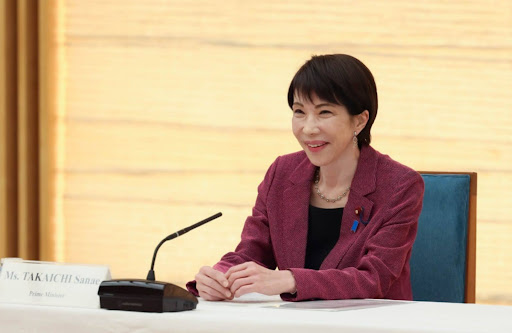
Japan’s government has activated its largest-ever strategic oil reserve deployment, with Prime Minister Sanae Takaichi announcing that approximately 80 million barrels will be released to refiners from Thursday. The move is a direct response to the disruption of oil tanker traffic through the Strait of Hormuz, caused by the ongoing US-Israel military campaign against Iran. Japan imports over 90% of its crude from Middle Eastern sources, making the security of this maritime route a matter of critical national importance.
The scale of the release is without precedent in Japanese energy history. Equivalent to 45 days of national demand, the deployment dwarfs the response to the Fukushima disaster of 2011, which was 1.8 times smaller. Japan’s total petroleum reserves stood at approximately 470 million barrels as of late last year, representing about 254 days of consumption — a buffer substantial enough to absorb even this massive release while retaining a meaningful safety margin.
Alongside reserve deployment, the government has introduced weekly-reviewed fuel subsidies holding gasoline prices near ¥170 per litre, significantly below the recent record of ¥190.8. These interventions are designed to prevent the global oil price spike from fully passing through to Japanese consumers and businesses. The ministry of trade and industry has made price stability a central priority throughout the crisis management process.
Social media has contributed to public anxiety, with viral posts warning of potential toilet paper shortages reminiscent of the 2011 disaster and the 1973 oil shock. Industry representatives were quick to rebut these fears, noting that nearly all toilet paper sold in Japan is made domestically from recycled materials with no reliance on Middle Eastern oil. The trade ministry urged rational purchasing behavior to prevent a self-fulfilling shortage driven by panic buying.
Prime Minister Takaichi has defined Japan’s international role as one of diplomatic leadership rather than military involvement, rebuffing President Trump’s call for naval deployment to the Strait of Hormuz. Her position is grounded in Japan’s postwar pacifist constitution and reflects a broader national consensus around non-military foreign policy. Japan will continue to use its considerable diplomatic weight to push for peaceful resolution of the conflict.